High dependence on veteran operators, inconsistent execution between shifts, long onboarding cycles for new technicians, and knowledge trapped in personal notes or experience.
$2.3M annual savings through reduced rework, uniform quality, and faster production ramp-up.
Each plant operated differently, with variability in output and a steep learning curve for new hires.
SOP adherence improved by 35%, defect rates dropped by 22%, and onboarding time fell from eight weeks to just three.
For decades, this automotive OEM thrived on craftsmanship and the expertise of its senior workforce. But as operations expanded across plants and the older generation of technicians began to retire, cracks started to appear. Each plant ran slightly differently. Every veteran had their 'own way' of fine-tuning machines. Quality fluctuations became routine, and scaling production began to feel like reinventing the wheel. What the leadership realized was that the problem wasn't a lack of skill — it was the absence of shared knowledge infrastructure. SOPs were static PDFs, rarely updated. Operators learned from experience, not documentation. And when a senior technician took leave, productivity dipped instantly.
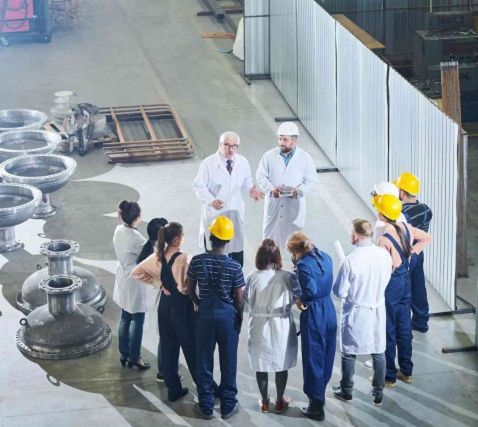
The manufacturer operated three major plants producing components for global automakers. While automation and ERP systems were in place, the shopfloor still ran on human memory. Each time a new operator joined, training relied heavily on shadowing an experienced worker. On average, it took nearly two months before a recruit could work independently. Meanwhile, small variations in setup or inspection led to defects — each one costly in both time and brand trust. A shift from 'manual wisdom' to 'digital intelligence' was overdue.
Ready to bridge the gap between veterans and new talent on your shopfloor?